2019年2月7日木曜日

新規アミノ・メチルサイクリン系抗生剤 Omadacycline 市中肺炎トライアル vs モキシフロキサシン

Paratek Announces FDA Approval of NUZYRA™ (Omadacycline)
http://phx.corporate-ir.net/phoenix.zhtml?c=253770&p=irol-newsArticle&ID=2369985


Omadacycline:テトラサイクリン系由来の新しいアミノメチルサイクリン抗生剤
テトラサイクリン耐性の排出・リボソーム防御機構克服された薬剤

肺炎球菌、インフルエンザ桿菌、黄色ブドウ球菌、非定型肺炎(レジオネラ、マイコプラズマ、クラミジア肺炎など)へのin vitro感受性あり
肺炎球菌に感受性あり、肺組織濃度維持する


Omadacycline for Pneumonia Treatment in the Community (OPTIC) trial

臨床効果非劣性証明

Omadacycline for Community-Acquired Bacterial Pneumonia
Roman Stets,., et al.
N Engl J Med 2019; 380:517-527
DOI: 10.1056/NEJMoa1800201


日本の各学会理事会メンバーへの製薬会社からの報酬

各学会のリーダーである理事会のメンバーが製薬メーカーから巨額paymentをもらうと利益相反に関して疑念が持たれてもおかしくない。故に、自らが公開すべきという事だと思う。

Pharmaceutical Company Payments to Executive Board Members of Professional Medical Associations in Japan
Hiroaki Saito, et al.
JAMA Intern Med. Published online February 4, 2019. doi:10.1001/jamainternmed.2018.7283
https://jamanetwork.com/journals/jamainternalmedicine/article-abstract/2723072


総額は $6 468 585
講演  $5 279 312;執筆 $412 900 ;コンサルティング $776 373
支払い額中央値  $7486 (中間4分位 [IQR], $1767-$20 277)

支払い額のうち、最大支払い受領理事会メンバー40名に、総額45.8%にあたる$2 960 928 が支払われた
日本内科学会が12名、日本泌尿器科学会が7名、日本皮膚科学会が7名がそのメンバー
最大の支払い対象は日本内科学会の理事で $51 974; IQR, $33 900-$86 349)
日本内科学会理事会メンバーへは総支払い額の20.8%が行ったことになる
同様日本泌尿器科学会 14.9%、日本皮膚科学会 11.1%

19の学会が理事会メンバーへの製薬メーカーへのpaymentに関し公的公開したというエビデンスはつかんでない


メーカーからの報酬全てが悪というわけでもないだろうが・・・


改変(コピペ&OCRのため、原文参照を)
-->
理事数 報酬受領人数(%) 記録数 value 平均(SD) 中央値(IQR) 最大値
内科学会 22 22 (100) 1176 1343732 61 079 (45 523) 51974(33 900-86 349) 171245
小児科学会 28 25 (89.3) 212 206861 7388 (7053) 3853 (2734-11 552) 23387
老年医療学会 22 16 (72.7) 152 133440 6065 (8952) 1647 (0-11 938) 37639
皮膚科学会 18 18 (100) 671 722150 40 199 (27 825) 34213(20 625-56 909) 97676
外科学会 23 23 (100) 371 385328 16 753 (13 033) 11 887 (7276-23 039) 44536
脳外科学会 23 22 (95.7) 259 242379 10 538 (6800) 10 165 (5893-15150) 27465
産科婦人科学会 32 30 (93.8) 331 317245 9914 (9101) 8099 (2997-13 324) 39356
眼科学会 19 19 (100) 437 514321 27 070 (19 625) 20697(11 470-47 120) 72710
整形外科学会 23 22 (95.7) 432 436479 18 977 (17 255) 17 114 (4853-22 810) 61157
耳鼻咽喉科学会 24 20 (83.3) 248 231281 9637 (12 981) 4870 (1406-11 297) 46463
形成外科・美容外科学会 17 9(52.9) 34 40244 2367 (4959) 497 (0-994) 17427
泌尿器科学会 21 20 (95.2) 846 965081 45 956 (38 683) 34073(19 543-55 358) 122967
麻酔科学会 27 21 (77.8) 133 133353 4939 (6079) 3679(497-6502) 24640
救急医療学会 15 13 (86.7) 76 76380 5092 (4903) 4921 (1293-7251) 17199
病理学会 15 10 (66.7) 64 62083 4139 (4962) 1915 (0-8746) 16283
精神科学会 20 19 (95.0) 344 357815 17 891 (20 805) 8976 (1399-24 721) 69580
放射線科学会 18 17 (94.4) 85 93389 5188 (5475) 4452 (1492-7358) 24293
リハビリテーション学会 23 17 (73.9) 186 181575 7895 (9731) 4572 (1023-7726) 29504
臨床検査学会 17 8(47.1) 70 55265 3251 (6600) 0(0-1084) 21492


かたやこういう記事
特集◎新専門医制度時代の学会と専門医《2》
製薬マネーの減少が学会を窮地に追い込む
2019/2/7
https://medical.nikkeibp.co.jp/leaf/mem/pub/report/t325/201902/559721.html

京都で開かれた内科学会総会 会費高い割に、内容 かなりしょぼかったと思うが・・・ 内科学会理事個人への報酬分 学会本体へ遷せばどう?

The Physical Activity Guidelines for Americans

“2018年11月のAHA年次集会で、連邦政府「身体活動ガイドライン」と VITAL and REDUCE-IT と DECLARE-TIMI 58といった高品質臨床トライアルの報告があった”

VITAL and REDUCE-IT:
Marine n−3 Fatty Acids and Prevention of Cardiovascular Disease and Cancer
JoAnn E. Manson,  et al., for the VITAL Research Group
https://www.nejm.org/doi/full/10.1056/NEJMoa1811403
ランダム化プラシーボ対照2x2区分デザイン、ビタミンDと海産物n-3脂肪酸(1g/日):男性50歳以上・女性55歳以上一次予防:重大心血管イベント・がん発生率低下認めず 

DECLARE-TIMI 58
アストラゼネカのフォシーガ、DECLARE-TIMI58試験で、幅広い2型糖尿病患者さんにおける心不全による入院または心血管死のリスク低下を示す
https://www.astrazeneca.co.jp/media/press-releases1/2018/2018111401.html
Wiviott S.D et al. ‘Dapagliflozin and Cardiovascular Outcomes in Type 2 Diabetes’. The New England Journal of Medicine. DOI https://www.nejm.org/doi/full/10.1056/NEJMoa1812389


で、本題の身体活動ガイドライン
The Physical Activity Guidelines for Americans
Katrina L. Piercy, . et al
https://jamanetwork.com/journals/jama/article-abstract/2712935

 (例によってGoogle訳)
PAGは、多数の集団のために様々な健康上の結果を改善するために身体活動の種類と量に関する情報と手引きを提供します。未就学児(3歳から5歳まで)は、成長と発達を促進するために1日を通して身体的に活動的であるべきです。 6歳から17歳までの子供や青年は、毎日60分以上の中程度から激しい運動をするべきです。成人は、少なくとも週に150分から300分の中強度の運動、または週に75分から150分の激しい強度の有酸素運動、または同等の強度と中強度の有酸素運動の組み合わせを行うべきです。彼らはまた、1週間に2日以上筋肉を強化する活動をするべきです。高齢者は、バランストレーニングや有酸素運動、筋力増強などの多成分運動をするべきです。妊娠中および産後の女性は、週に少なくとも150分の中強度の有酸素運動をするべきです。可能な限り慢性疾患や障害を持つ成人は成人のための重要なガイドラインに従うべきであり、そして有酸素運動と筋肉強化活動の両方をするべきです。勧告は、より多くを動かし、より少なく座っていることが、ほぼすべての人に利益をもたらすことを強調しています。身体活動が最も少ない個人は、中程度から活発な身体活動のわずかな増加でさえも最も利益を得ます。身体活動が多いほど、追加の利点があります。有酸素運動と筋力増強の両方の運動が有益です。


Box 1. 身体活動性の健康ベネフィットに関する新しいエビデンス

  • 3−5歳小児での骨健康・体重の改善
  • 6−13歳では認知機能改善+追加部位での癌リスク減少
  • 脳の健康へのベネフィット、認知機能改善、不安・うつリスク軽減、睡眠・QOL改善
  • 高齢者骨折関連外傷リスク減少
  • 妊娠女性では、過剰な体重増加、妊娠糖尿病、産後うつのリスク減少
  • 慢性医療疾患患者では、総死亡、疾患原因死亡率減少、機能改善、QOL改善

Box 2. Health Benefits Associated With Regular Physical Activity
Children and Adolescents:小児・青年期

  • 3−17歳:骨健康の改善、3−17歳:体重改善
  • 6−17歳:心臓呼吸・筋肉フィットネス改善、6−13歳:認知改善
  • 6−13歳:うつリスク減少
Adults and Older Adults:正常・高齢

  • 総死亡率減少
  • 心血管死亡率減少
  • 心血管(心臓疾患と卒中含め)リスクの減少
  • 高血圧リスク減少
  • 2型糖尿病リスク減少
  • 不都合な脂質特性のリスク減少
  • がん(膀胱、乳、子宮内膜、食毒、腎臓、肺、胃)のリスク減少
  • 認知改善
  • 認知症(アルツハイマー病を含む)リスク減少
  • QOL改善
  • 不安減少
  • うつリスク減少
  • 睡眠改善
  • 体重増加の緩徐化・減少
  • 減量、特にカロリー摂取減少と組み合わせで
  • 減量後体重増加予防
  • 骨健康改善
  • 身体機能の改善
  • 転倒リスク減少(高齢者)
  • 転倒関連外傷リスク減少(高齢者)


Box 3. Types and Intensity of Physical Activity
Aerobic Activity

  • An activity in which the body’s large muscles move for a sustained amount of time, therefore improving cardiorespiratory fitness. Aerobic activity is also called endurance or cardio activity. Examples include brisk walking, running, or bicycling.
Muscle-Strengthening Activity
  • An activity that increases skeletal muscle strength, power, endurance, and mass. Examples include weight lifting or resistance training.

Bone-Strengthening Physical Activity

  • An activity that produces a force on the bones, which promotes bone growth and strength. Examples include jumping rope or running.

Balance Activity

  • An activity designed to improve individuals’ ability to resist forces within or outside of the body that cause falls while a person is stationary or moving. Examples include lunges or walking backward.

Multicomponent Physical Activity

  • An activity that includes more than 1 type of physical activity, such as aerobic, muscle strengthening, and balance training. Examples include some dancing or sports.

Absolute Intensity

  • Refers to the rate of work being performed and does not consider the physiologic capacity of the individual. This is often expressed in metabolic equivalent of task (MET) units. Moderate-intensity physical activities such as walking briskly or raking the yard have a MET level of 3 to 5.9 METs.

Relative Intensity

  • Takes into account or adjusts for a person’s cardiorespiratory fitness. Someone who is more fit will perceive an exercise to be easier and thus rate it as of lower relative intensity than someone who is less fit.


Box 4. Key Guidelines for Preschool-aged Children and for School-aged Children and Adolescents
Preschool-aged Children

  • Preschool-aged children (3 through 5 years) should be physically active throughout the day to enhance growth and development.
  • Adult caregivers of preschool-aged children should encourage active play that includes a variety of activity types.

School-aged Children and Adolescents

  • It is important to provide young people opportunities and encouragement to participate in physical activities that are appropriate for their age, that are enjoyable, and that offer variety.
  • Children and adolescents aged 6 through 17 years should do 60 minutes (1 hour) or more of moderate-to-vigorous physical activity daily
  • Aerobic: Most of the 60 minutes or more per day should be either moderate- or vigorous-intensity aerobic physical activity and should include vigorous-intensity physical activity on at least 3 days a week.
  • Muscle-strengthening: As part of their 60 minutes or more of daily physical activity, children and adolescents should include muscle-strengthening physical activity on at least 3 days a week.
  • Bone-strengthening: As part of their 60 minutes or more of daily physical activity, children and adolescents should include bone-strengthening physical activity on at least 3 days a week.


Box 5. Key Guidelines for Adults

  • Adults should move more and sit less throughout the day. Some physical activity is better than none. Adults who sit less and do any amount of moderate-to-vigorous physical activity gain some health benefits.
  • For substantial health benefits, adults should do at least 150 minutes (2 hours and 30 minutes) to 300 minutes (5 hours) a week of moderate-intensity, or 75 minutes (1 hour and 15 minutes) to
  • 150 minutes (2 hours and 30 minutes) a week of vigorous-intensity aerobic physical activity, or an equivalent combination of moderate- and vigorous-intensity aerobic activity. Preferably, aerobic activity should be spread throughout the week.
  • Additional health benefits are gained by doing physical activity beyond the equivalent of 300 minutes (5 hours) of moderate-intensity physical activity a week.
  • Adults should also do muscle-strengthening activities of moderate or greater intensity that involve all major muscle groups on
  • 2 or more days a week, as these activities provide additional health benefits.


Box 6. Key Guidelines for Older Adults

  • The key guidelines for adults also apply to older adults. In addition, the following key guidelines are just for older adults:
  • As part of their weekly physical activity, older adults should do multicomponent physical activity that includes balance training as well as aerobic and muscle-strengthening activities.
  • Older adults should determine their level of effort for physical activity relative to their level of fitness.
  • Older adults with chronic conditions should understand whether and how their conditions affect their ability to do regular physical activity safely.
  • When older adults cannot do 150 minutes of moderate-intensity aerobic activity a week because of chronic conditions, they should be as physically active as their abilities and conditions allow.


Box 7. Key Guidelines for Women During Pregnancy and the Postpartum Period

  • Women should do at least 150 minutes (2 hours and 30 minutes) of moderate-intensity aerobic activity a week during pregnancy and the postpartum period. Preferably, aerobic activity should be spread throughout the week.
  • Women who habitually engaged in vigorous-intensity aerobic activity or who were physically active before pregnancy can continue these activities during pregnancy and the postpartum period.
  • Women who are pregnant should be under the care of a health care practitioner who can monitor the progress of the pregnancy. Women who are pregnant can consult their health care practitioner about whether or how to adjust their physical activity during pregnancy and after the child is born.


 Box 8. Key Guidelines for Adults With Chronic Health Conditions and Adults With Disabilities

  • Adults with chronic conditions or disabilities, who are able, should do at least 150 minutes (2 hours and 30 minutes) to 300 minutes (5 hours) a week of moderate-intensity, or 75 minutes (1 hour and 15 minutes) to 150 minutes (2 hours and 30 minutes) a week of vigorous-intensity aerobic physical activity, or an equivalent combination of moderate- and vigorous-intensity aerobic activity. Preferably, aerobic activity should be spread throughout the week.
  • Adults with chronic conditions or disabilities, who are able, should also do muscle-strengthening activities of moderate or greater intensity that involve all major muscle groups on 2 or more days
  • a week, as these activities provide additional health benefits.
  • When adults with chronic conditions or disabilities are not able to meet the above key guidelines, they should engage in regular physical activity according to their abilities and should avoid inactivity.
  • Adults with chronic conditions or symptoms should be under the care of a health care practitioner. People with chronic conditions can consult a health care professional or physical activity specialist about the types and amounts of activity appropriate for their abilities and chronic conditions.


Box 9. Key Guidelines for Safe Physical Activity

  • To do physical activity safely and reduce risk of injuries and other adverse events, people should
  • Understand the risks, yet be confident that physical activity can be safe for almost everyone.
  • Choose types of physical activity appropriate for their current fitness level and health goals, because some activities are safer than others.
  • Increase physical activity gradually over time to meet key guidelines or health goals. Inactive people should “start low and go slow” by starting with lower-intensity activities and gradually increasing how often and how long activities are done.
  • Protect themselves by using appropriate gear and sports equipment, choosing safe environments, following rules and policies, and making sensible choices about when, where, and how to be active.
  • Be under the care of a health care practitioner if they have chronic conditions or symptoms. People with chronic conditions and symptoms can consult a health care professional or physical activity specialist about the types and amounts of activity appropriate for them.

カナグリフロジンと2型糖尿病 日本人への包括的効果

日本人 カナグル:包括的臨床状態への効果

日本人を含むアジア人種の肥満頻度に比例しないメタボリックシンドロームの罹病率の高さ、内臓脂肪との兼ね合いが課題になっているだけに、以下の脂肪組織・アディポネクチン・インスリン感受性へのSGLT2iの効果は日本人T2D治療にとって頼もしい(別にSGLT2iクラス内比較してるわけじゃないから・・・他のSGLT2iでも同じかもしれないけど)


single-arm, single-center, open-label study という制限
体重および体脂肪量低下効果、ならびにそれに伴うインスリン抵抗性の改善効果確認

特に、CANAの投与による血中アディポネクチン濃度上昇ってのが印象深い

Effect of canagliflozin on the overall clinical state including insulin resistance in Japanese patients with Type 2 diabetes mellitus
Yoko Koike et al.
Diabetes Research and Clinical Practice
DOI: https://doi.org/10.1016/j.diabres.2019.01.029

2型糖尿病日本人患者:24週カナグリフロジン 100mg/日24週間投与

HbA1c、空腹時血糖、血中肝機能、血中アディポネクチン値有意低下

体重、内臓脂肪、皮下脂肪面積、脂肪量・除脂肪量、脂肪肝減少

血中アディポネクチン値変化量は有意に体脂肪・内臓脂肪面積変化に相関

グルコースクランプ検査:glucose infusion rate (GIR)  3.25 ± 1.53 → 4.11 ± 1.30 mg/kg/min (P < 0.05)


空腹時アディポネクチン変化量と内臓脂肪面積相関
 Pearson’s correlation coefficient.


2019年2月6日水曜日

脳波ガイド下麻酔で術後せん妄改善せず・・・でも生存率改善?

術後せん妄は高齢患者などに一般的かつ重要な合併症で、できるだけ麻酔深度を浅くするよう、 Bispectral index(BIS)は独自アルゴリズムにより意識レベルを0-100までの数値化するもの。ただ、BIS値と EEG burst suppression (deep coma) から完全覚醒までのスペクトラムの相関性の不一致が多くあるようでまだ議論の世界らしい。
このような未消化なテクノロジーを使って麻酔する倫理性は?と疑問ももたげるが、BISを用いた脳波ガイド下麻酔によるせん妄への影響

プライマリアウトカムが手術5日間内のせん妄発生率、セカンダリアウトカムは麻酔薬平均量・術中低血圧時間、術中覚醒時間、30日死亡率

せん妄発生率に有意差なし (157/604 (26%) vs 140/609(23%))
麻酔投与量は結果的に通常値量群より少なく (0.60 vs 0.80)

ただ、30日死亡率はEEGガイド下で少ない( 0.7% vs 3.1%)という筆者等にとっては意外な結果

以下、最近定例化しているGoogle翻訳

Effect of Electroencephalography-Guided Anesthetic Administration on Postoperative Delirium Among Older Adults Undergoing Major Surgery
The ENGAGES Randomized Clinical Trial
Troy S. Wildes, et al. ; for the ENGAGES Research Group
JAMA. 2019;321(5):473-483. doi:10.1001/jama.2018.22005


重要性術中脳波(EEG)波形の抑制は、過度の全身麻酔を示唆していることが多く、術後せん妄と関連しています。
目的:脳波ガイド下麻酔薬投与が術後せん妄の発生率を低下させるかどうかを評価すること。 
デザイン、設定、および参加者セントルイスのBarnes-Jewish病院で大手術を受け、全身麻酔を受けている60歳以上の成人1232人を対象としたランダム化臨床試験。募集は2015年1月から2018年5月までで、2018年7月まで追跡調査が行われました。 
介入患者は、1:1(心臓対非心臓手術と最近の転倒歴の陽性対で層別化)で無作為化され、EEGガイド下の麻酔薬投与(n = 614)または通常の麻酔治療(n = 618)を受けた。 
主な結果と対策主な結果は、術後1〜5日目の偶発性せん妄であった。術中の対策には、麻酔薬濃度、EEG抑制、および低血圧が含まれた。有害事象には、望ましくない術中の動き、想起による術中の意識、術後の悪心および嘔吐、医学的合併症、ならびに死亡が含まれた。
1232人の無作為化患者(年齢中央値、69歳[範囲、60〜95人]; 563人の女性[45.7%])の結果、1213人(98.5%)が主要転帰について評価された。術後1日から5日のせん妄は、ガイド群の604人の患者のうち157人(26.0%)および通常の治療群の609人の患者のうち140人(23.0%)で発生した(差、3.0%[95%CI、 -  2.0%から8.0%)。 %]; P = .22)。

中央値の呼気終末揮発性麻酔薬濃度は、通常の治療群よりも誘導群で有意に低かった(0.69対0.80最小肺胞濃度;差、-0.11 [95%CI、-0.13から-0.10)、およびEEG抑制を伴う平均累積時間有意に少なかった(7対13分;差、−6.0 [95%CI、−9.9〜 − 2.1])。平均動脈圧が60 mmHg以下で累積時間中央値に群間の有意差はなかった(7対7分;差、0.0 [95%CI、-1.7から1.7])。 
望ましくない運動は、ガイド付き患者137人(22.3%)および通常治療群95人(15.4%)に発生した。術中意識を報告した患者はいなかった。

術後の悪心および嘔吐は、ガイド付き患者48人(7.8%)および通常の治療群55人(8.9%)に報告されていた。重度の有害事象は、ガイド付き患者124人(20.2%)、通常治療群130人(21.0%)で報告されています。手術後30日以内に、ガイドグループの4人の患者(0.65%)および通常のケアグループの19人(3.07%)が死亡した。 
結論と関連性大手術を受けている高齢者では、通常の治療と比較してEEGガイド下麻酔薬投与は術後せん妄の発生率を減少させなかった。この所見は、この適応症に対するEEGガイド麻酔薬投与の使用を支持していません。


せん妄減少目的だったが、結果的に、浅い麻酔は術後死亡率を減らす可能性もある
混乱をもたらす結果となった


2019年2月5日火曜日

自動診察室血圧(AOBP)測定:システマティック・レビュー 診察室血圧のスタンダードとすべき?

自動診察室血圧
日本高血圧学会:http://www.jpnsh.jp/com_ac_wg2.html

家庭血圧・通常診察室血圧との関連で本邦でも検討されているが・・・

以下、リサーチ下診察室血圧や通常診察室血圧などとの比較システミック・レビュー


持続血圧測定が心血管イベント個別リスク予測として最良で一貫性があり多リスク要素と独立した存在であることは間違いない。一方、日常臨床でのマニュアル血圧測定の性作成と役割に関して疑義が投じられ、"white coat effect"だけでなく、正確性乏しくawake 血圧値との相関性さえ乏しいと指摘。oscillometric 血圧計は複数測定法の組み合わせで質改善をもたらす可能性あり、マニュアル測定法に劣ると言えなくなってきた。医師や看護師不要の Omron 907 (Omron Healthcare) と BpTRU (BpTRU Medical Devices Inc)など診療スタッフ不在下で血圧自動測定複数回施行できるようになった

Automated Office Blood Pressure測定を用いた方法とその他測定方法の比較に関するシステマティック・レビュー

Automated Office Blood Pressure測定法:機器毎測定法が異なる。
We considered unattended BP measurement recorded with fully automated devices as valid measurements of AOBP if they did not require any involvement of the patient, such as activating the device. All but 1 study14 used either the BpTRU (5 readings at 1- to 2-minute intervals after an initial test reading without antecedent rest), Omron 907 (3 readings, usually at 1-minute intervals with 5 minutes of antecedent rest), or the WatchBP Office (Microlife AG; 1-minute delay then 3 readings at 1-minute intervals).
No additional rest was mandated before the initiation of the AOBP measurements, although several studies,15-18 which otherwise followed AOBP principles, did include an additional rest period.

研究用血圧測定:research BP measurementや、ルーチン診察室血圧測定:routine office BP measurementと分けられているが、ややわかりにくい。定義が書かれている
We defined a research quality office BP as a measurement performed according to standard guidelines, such as those of the American Heart Association. A routine office BP measurement was defined as a manual or electronic BP reading taken in usual clinical practice and not as part of a research study. These readings were obtained retrospectively after office staff, who were unaware that the measurements would be used in a research study, had recorded them. In order for the BPs to be considered routine and to avoid observer bias, they could not be measured prospectively as part of a study.


Comparing Automated Office Blood Pressure Readings With Other Methods of Blood Pressure Measurement for Identifying Patients With Possible Hypertension
A Systematic Review and Meta-analysis
Michael Roerecke, et al.
JAMA Intern Med. Published online February 4, 2019. doi:10.1001/jamainternmed.2018.6551
https://jamanetwork.com/journals/jamainternalmedicine/fullarticle/2723074


収縮期血圧平均差 (MD): Automated Office Blood Pressure (AOBP) (Reference) とAwake Ambulatory Blood Pressure (ABP) Measurement;収縮期血圧AOBP 130 mm Hg以上サンプル
Weights are from random-effects analysis. TRUE-HTA is a study name.


Weights are from random-effects analysis. TRUE-HTA is a study name.


収縮期血圧平均差 (MD): Automated Office Blood Pressure (AOBP) (Reference) とRoutine Office BP Measurement;収縮期血圧AOBP 130 mm Hg以上サンプル
Weights are from random-effects analysis.


主要アウトカム測定:収縮期血圧と拡張期血圧の各測定値のプール化平均差(95% CI) 

結果:データ抽出は9279名被検者 31論文記事(男性 4736名、女性 4543名)
収縮期血圧 130 mmHg以上のサンプルで
ルーチン診察室血圧とリサーチ上の収縮期血圧測定値はAOBP測定値より高値
プール化平均差 ルーチン診察室収縮期血圧測定値との差 14.5 mm Hg (95% CI, 11.8-17.2 mm Hg; n = 9; I2 = 94.3%; P < .001) 
同様、リサーチ上の収縮期血圧測定値 7.0 mm Hg (95% CI, 4.9-9.1 mm Hg; n = 9; I2 = 85.7%; P <.001) 


結論と知見:自動診察室血圧(AOBP)測定は、患者を静かな空間に1人にするという適切環境下で行えば、ルーチンの臨床での診察室血圧測定値より性格で、持続血圧測定値に類似、white coat effect避けることができる平均AOBP値となる。
臨床医はこのAOBPに対して従来の診察室血圧測定法に比べ有益性不確かだとして迷いがあったが、このエビデンスに基づけば、AOBPは今こそ施行すべきルーチンの臨床実践の場で血圧測定手段である


日本の臨床の場でこのような環境構築可能な施設って限られると思う。

うちなんか田舎だから小屋を作ってってのは可能だろうが、出資分弁済可能な診療報酬なんて期待できないから・・・当面、高価な趣味の世界だろうなぁ


2019年2月4日月曜日

COPD:ActRII受容体遮断剤bimagrumabは骨格筋力増大するも運動耐用改善せず ただ、最大静的呼気圧改善


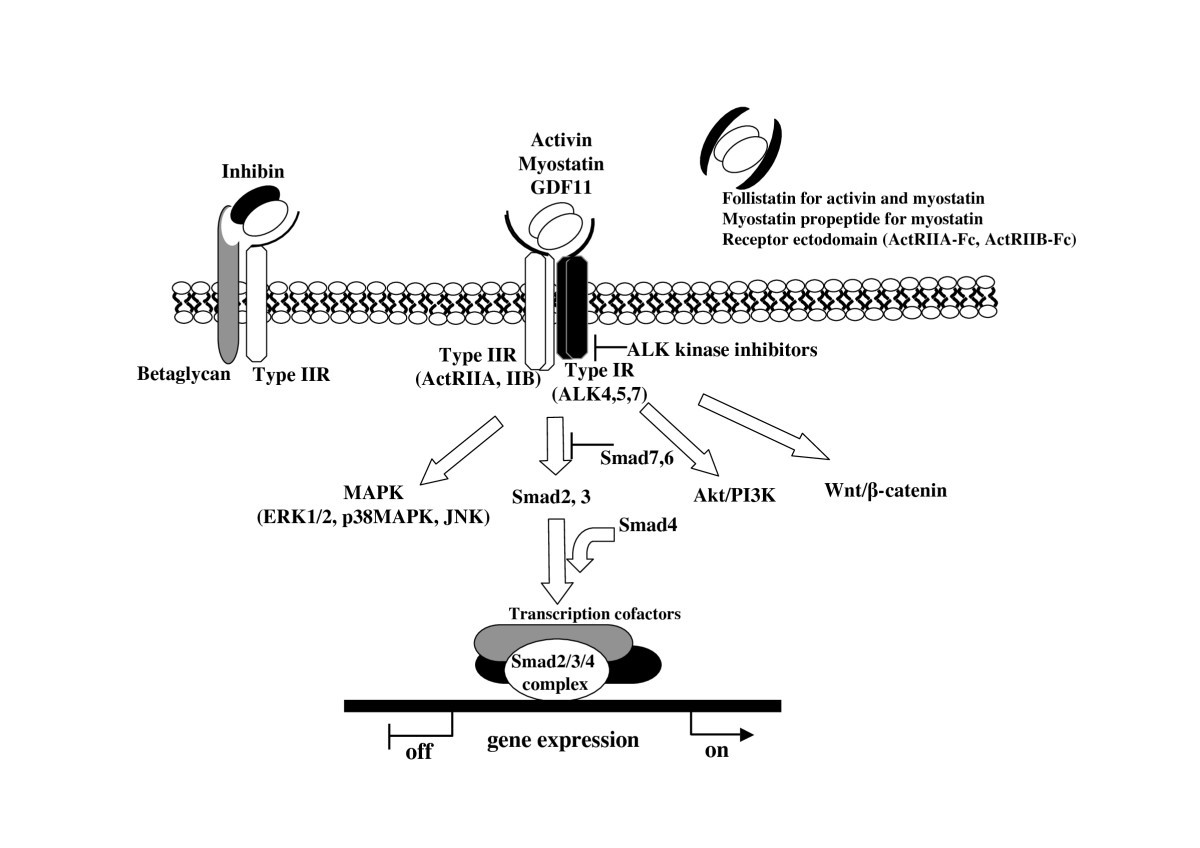
ミオスタチン( 細胞増殖分化因子: growth and differentiation factor 8 : GDF-8)、アクチビンA、アクチビンB、およびGDF-11はすべて、アクチビンII型受容体(ActRII)を介して作用する骨格筋量の負の調節因子。アクチビン受容体は、I型サブユニット(ALK4またはALK5)およびII型サブユニット(ActRIIAまたはActRIIB)からなるヘテロ二量体である。


以下 GDR-11だが・・・


https://media.springernature.com/full/springer-static/image/art%3A10.1186%2F1478-811X-7-15/MediaObjects/12964_2009_Article_63_Fig1_HTML.jpg


ミオスタチン遺伝子異常が骨格筋増大をもたらす
Myostatin Mutation Associated with Gross Muscle Hypertrophy in a Child
Markus Schuelke, et al.
N Engl J Med 2004; 350:2682-2688


ActRII受容体遮断薬であるbimagrumabの効果で大腿骨格筋量(TMV)増大をもたらす
COPD患者では筋力低下ししているが、筋力が低く機能が制限されているCOPD患者で増加する。
肺リハビリテーション(PR)は、運動能力と大腿四頭筋力の両方を増加させることが知られている運動療法で、急性と慢性の両方の状況でCOPD患者の大腿四頭筋ミオスタチン発現を減少させます。PRを完遂することは、COPDの増悪、救急部の受診、入院、および死亡の頻度の減少と関連。

筋肉量と運動能力も増加させる薬理学的アプローチは、生活の質(QOL)を改善し、COPD患者のケアに関連するコストを削減する可能性がある。ただ、非アンドロゲンベースの薬理学的同化剤の臨床経験は効果あれば少なく意義がある


Activin Type II Receptor Blockade for Treatment of Muscle Depletion in Chronic Obstructive Pulmonary Disease. A Randomized Trial
Michael I. et al.
AJRCCM  Vol. 199, No. 3  Feb 01, 2019
https://doi.org/10.1164/rccm.201802-0286OC


week 4まで大腿筋量(TMV, cm3Week 4: +5.9% [3.4%, SD] vs. 0.0% [3.3%], P<0.001; Week 8: +7.0% [3.7%] vs. −0.7% [2.8%], P<0.001;Week 16: +7.8% [5.1%] vs. −0.9% [4.5%], P<0.001; Week 24: +5.0% [4.9%] vs. −1.3% [4.3%], P<0.001)

24週間で、両群 6MWD増加に差を認めず

副事象は筋肉関連症状、下痢、ざ瘡で、何れも軽症


筋力には影響無かったが、最大静的呼気圧の有意改善あり!


HPVワクチンをめぐる日本の"失われた8年"と、私たちが検証すべきこと

「子宮頸がんワクチン」という呼び方に、以前から違和感があります。 HPVワクチンが子宮頸がん予防に重要であることは間違いありません。日本では女子への定期接種として導入され、子宮頸がん予防を中心に説明されてきたため、この名称が広まった経緯も理解できます。 しかし、このワクチンが...