Meta-Analysis Comparing Torsemide Versus Furosemide in Patients With Heart Failure
Bishoy Abraham, et al.
the American Journal of Cardiology
Published:October 10, 2019DOI:https://doi.org/10.1016/j.amjcard.2019.09.039 https://www.ajconline.org/article/S0002-9149(19)31108-7/fulltext
19研究 (9つのRCT、 10の観察研究)、総数 19,280名 1996年1月から2019年8月までの
システマティック・レビュー
平均フォローアップ15ヶ月間にて、トラセミドは有意に心不全入院を減少(10.6% vs 対フロセミド 18.4%; odds ratio [OR] 0.72, 95% 信頼区間[CI] [0.51, 1.03], p = 0.07, I2 = 18%; number needed to treat [NNT] = 23)
トラセミドは統計学的に有意に機能改善(NYHA分類 III/IV→I/II) (72.5% vs 対フロセミド58%; OR 2.32, 95% CI (1.32, 4.1), p = 0.004, I2 = 27%; NNT = 5)、心原因死亡率低下 (1.5% vs 対フロセミド4.4%; OR 0.37, 95% CI (0.20, 0.66), p <0 .001="" i2="0%," nnt="40)</p">
しかし、2群間の全原因死亡率と薬剤副作用に差を認めない
抗コリン製剤はCOPDにおいて好まれるが、以下の動物モデル・ヒトサンプルでの検討では、コリン作動刺激にて喫煙関連肺病態への一部微小解剖構造への改善効果が観られる COPD患者で粘液粘稠性、固形成分が増加している 齧歯類は気道粘膜下腺が少なく動物モデルが少ない。 タバコ暴露フェレットの動物実験と、COPD患者か荒れられた培養気道上皮のヒト研究と組み合わせた報告で、Tc^DTPA retension測定による in vivo 粘液繊毛クリアランスが喫煙暴露フェレットで低下することをまず示した。
マイクロ光コヒーレンストモグラフィーによりフェレット切除気管で喫煙暴露動物では粘液繊毛輸送減少が約30%であり、この知見では、気道加湿や、繊毛beating頻度では有意な相関を認めなかったが、培養ヒト気道上皮では24時間喫煙暴露で気道のhydration低下(気道表面液層の減少として表現)と粘液繊毛輸送減少が見られた。
Excess mucus viscosity and airway dehydration impact COPD airway clearance
Vivian Y. Lin, Niroop Kaza, Susan E. Birket, Harrison Kim, Lloyd J. Edwards, Jennifer LaFontaine, Linbo Liu, Marina Mazur, Stephen A. Byzek, Justin Hanes, Guillermo J. Tearney, S. Vamsee Raju, Steven M. Rowe European Respiratory Journal 2020 55: 1900419; DOI: 10.1183/13993003.00419-2019
Conservative versus Interventional Treatment for Spontaneous Pneumothorax
List of authors.
Simon G.A. Brown, , et al., for the PSP Investigators
January 30, 2020
N Engl J Med 2020; 382:405-415
DOI: 10.1056/NEJMoa1910775 https://www.nejm.org/doi/full/10.1056/NEJMoa1910775
【JAMA 臨床的ガイドライン】
JAMA Clinical Guidelines Synopsis March 26, 2020
Management of Critically Ill Adults With COVID-19
Jason T. Poston, et al.
JAMA. Published online March 26, 2020. doi:10.1001/jama.2020.4914 https://jamanetwork.com/journals/jama/fullarticle/2763879
Guideline title Surviving Sepsis Campaign: Guidelines on the Management of Critically Ill Adults With COVID-19
Developer Surviving Sepsis Campaign (SSC)
Release date March 23, 2020
Target population Critically ill adults with COVID-19
機械換気を受けている成人で、換気を最適化しているにもかかわらず重度のARDSと低酸素血症を呈している場合には、 trial of inhaled pulmonary vasodilatorの試験を行うことが推奨される。酸素化の急速な改善が認められない場合は、治療を漸減すべきである(弱い推奨、非常にLQE)。lung recruitment maneuver (intended to open otherwise closed lung segments, such as 40 cm H2O inspiratory hold for 40 seconds)使用がrecruitment maneuver不使用より推奨され(弱い推奨、LQE)、staircase (incremental PEEP) recruitment maneuverの使用は推奨されない(強い推奨、中等度QE)。選択された患者に対しては、extracorporeal membrane oxygenation (ECMO)のための静脈循環の使用またはECMOセンターへの紹介が可能であれば、推奨される(弱い推奨、LQE)。
Epidemiological and clinical features of the 2019 novel coronavirus outbreak in China
Yang Yang, Qingbin Lu, Mingjin Liu, Yixing Wang, Anran Zhang, Neda Jalali, Natalie Dean, Ira Longini, M. Elizabeth Halloran, Bo Xu, Xiaoai Zhang, Liping Wang, Wei Liu, Liqun Fang
doi: https://doi.org/10.1101/2020.02.10.20021675 https://www.medrxiv.org/content/10.1101/2020.02.10.20021675v1.full.pdf+html
Coronavirus outbreak: what’s next?
Experts weigh up the best- and worst-case scenarios as the World Health Organization declares a global health emergency.
31 JANUARY 2020 https://www.nature.com/articles/d41586-020-00236-9
Characteristics of and Important Lessons From the Coronavirus Disease 2019 (COVID-19) Outbreak in China
Summary of a Report of 72 314 Cases From the Chinese Center for Disease Control and Prevention
Zunyou Wu, MD, PhD; Jennifer M. McGoogan, PhD
JAMA. Published online February 24, 2020. doi:10.1001/jama.2020.2648 https://jamanetwork.com/journals/jama/fullarticle/2762130
In the intervening time, however, some observers seized upon the 3.8 number, with one Harvard doctor describing it as “thermonuclear pandemic level bad” in a tweet that has since been retweeted more than 16,000 times. That’s a dubious interpretation, and here are six reasons why.
First, the R0 estimates for the new coronavirus are in line with those for many other diseases. They’re similar to those for SARS (2 to 5) and HIV (also 2 to 5), and considerably lower than those for measles (12 to 16).
Second, a bigger R0 doesn’t necessarily mean a worse disease. Seasonal flu has an R0 that hovers around 1.3, and yet it infects millions of people every year. SARS had an R0 of 2 to 5 and infected just over 8,000 people. The number is a measure of potential transmissibility. It does not actually tell you how fast a disease will spread.
伝播モデル
Preliminary estimation of the basic reproduction number of novel coronavirus (2019-nCoV) in China, from 2019 to 2020: A data-driven analysis in the early phase of the outbreak
View ORCID ProfileShi Zhao, Jinjun Ran, Salihu S Musa, Guangpu Yang, Yijun Lou, Daozhou Gao, Lin Yang, View ORCID ProfileDaihai He
doi: https://doi.org/10.1101/2020.01.23.916395
This article is a preprint and has not been certified by peer review [what does this mean?]. https://www.biorxiv.org/content/10.1101/2020.01.23.916395v1
The mean estimate of R0 for the 2019-nCoV ranges from 3.30 (95%CI: 2.73-3.96) to 5.47 (95%CI: 4.16-7.10), and significantly larger than 1. Our findings indicate the potential of 2019-nCoV to cause outbreaks.
A mathematical model for simulating the transmission of Wuhan novel Coronavirus
Tianmu Chen, Jia Rui, Qiupeng Wang, Zeyu Zhao, Jing-An Cui, Ling Yin
doi: https://doi.org/10.1101/2020.01.19.911669 https://www.biorxiv.org/content/10.1101/2020.01.19.911669v1
The reproductive number (R0) (the expected number of secondary cases produced by a single infected person in a susceptible population) for SARS-CoV-2, although still preliminary, is estimated between 2 and 3, suggesting a higher pandemic potential than SARS. Transmission from an asymptomatic carrier appears to be possible,( JAMA. Published online February 21, 2020. doi:10.1001/jama.2020.2565),(Emerg Microbes Infect. 2020;9(1):386-389.) which, if confirmed in larger studies, will have important implications for screening and isolation.
A report of 9 pregnant patients suggests that perinatal transmission is unlikely but larger studies are needed to confirm this finding.(Lancet. Published February 12, 2020. doi:10.1016/S0140-6736(20)30360-3)
“Aerosol transmission refers to the mixing of the virus with droplets in the air to form aerosols, which causes infection after inhalation, according to medical experts,” said to China Daily Zeng Qun, deputy head of the Shanghai Civil Affairs Bureau.
“As such, we have called on the public to raise their awareness of the prevention and control of the disease caused by family gatherings,” said Zeng during at a daily media briefing.
Professionals explained that direct transmission occurs when the infection is caused by inhalation of air from a patient who sneezes and coughs. Meanwhile, contact transmission happens when a person comes in to contact with an object tainted with droplets of the virus and then touches the membranes of his mouth, nose, and/or eyes.
Airborne transmission is defined as resulting from the inhalation of small particles, often termed droplet nuclei and considered to have diameters 5 μm or less.
aerosol transmissionの定義:An aerosol is a collection of solid or liquid particles suspended in a gas, such as air.
Aerosol transmission of infectious disease.
JOEM Volume 57, Number 5, May 2015
DOI: 10.1097/JOM.0000000000000448
A broad range of coronaviruses are found in bats, which might play a crucial role in the virus evolution of alpha- and betacoronavirus lineages in particular. However, other animal species can also act as host and animal reservoir.
The incubation period of coronaviruses ranges from 2–14 days. SARS-CoV had an incubation period between 3–10 days and MERS-CoV up to 14 days.
In humans, the transmission of coronaviruses between an infected individual and others can occur via respiratory secretions. This can happen either directly through droplets from coughing or sneezing, or indirectly through touching contaminated objects or surfaces as well as close contact, such as touching or shaking hands and then y touching your nose, eyes or mouth. Nosocomial transmission has been described as an important driver in the epidemiology of SARS and MERS.
For SARS-CoV, bats were the likely origin of the virus, which further spread to Himalayan palm civets, Chinese ferret badgers and raccoon dogs at the wet markets of Guangdong, China. People handling or consuming these animals were infected and further spread the virus through human-to-human transmission.
For aerosol-generating procedures, such as tracheal intubation, broncho-alveolar lavage and manual ventilation, airborne precautions are recommended. The guidance recommends that the procedure should be performed in an adequately ventilated room with the number of persons in the room limited to a minimum.
COVID-19 in 2 Persons with Mild Upper Respiratory Symptoms on a Cruise Ship, Japan
Takeshi ArashiroComments to Author , Keiichi Furukawa, and Akira Nakamura
Emerging Infectious Diseases ISSN: 1080-6059
https://wwwnc.cdc.gov/eid/article/26/6/20-0452_article
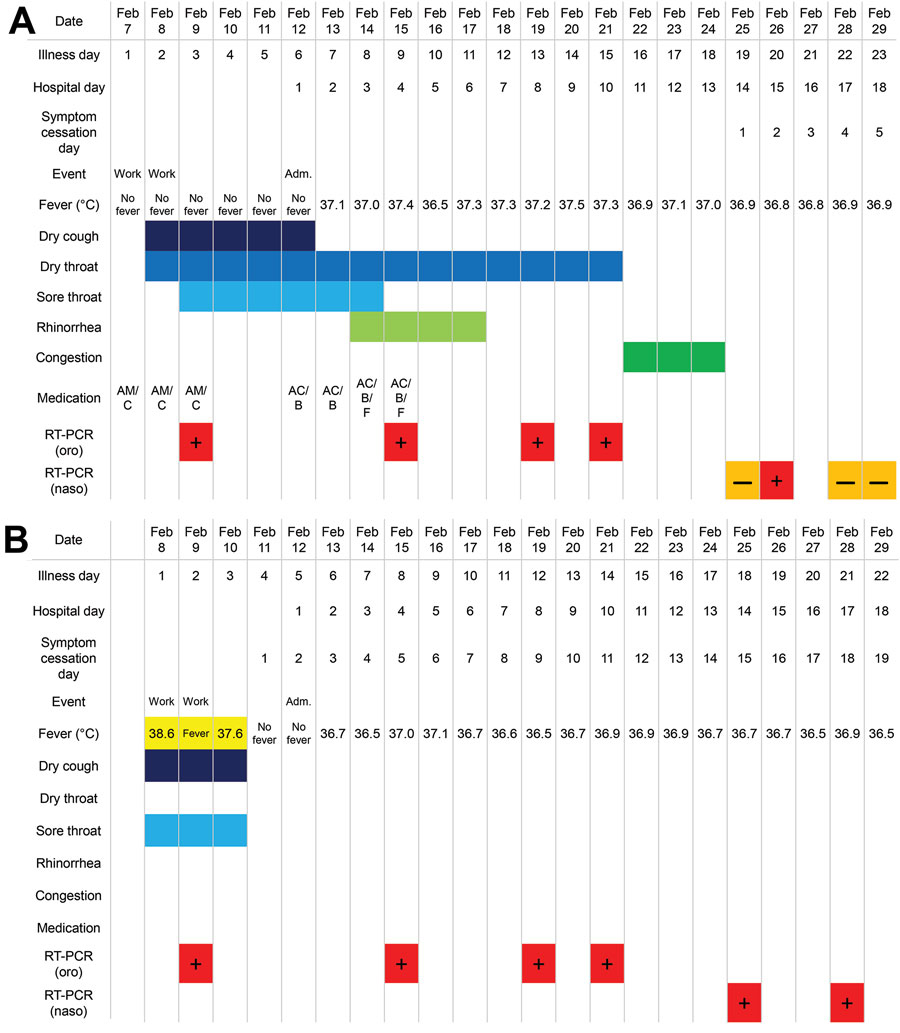
We describe 2 cases of COVID-19 in patients with mild upper respiratory
symptoms. Both patients worked on a cruise ship quarantined off the
coast of Japan. One patient had persistent, low-grade upper respiratory
tract symptoms without fever. The other patient had rapid symptom
cessation but persistent viral RNA detection.
垂直感染の証拠はない
Clinical characteristics and intrauterine vertical transmission potential of COVID-19 infection in nine pregnant women: a retrospective review of medical records
Huijun Chen, et al.
Published:February 12, 2020DOI:https://doi.org/10.1016/S0140-6736(20)30360-3 https://www.thelancet.com/journals/lancet/article/PIIS0140-6736(20)30360-3/fulltext
The clinical characteristics of COVID-19 pneumonia in pregnant women were similar to those reported for non-pregnant adult patients who developed COVID-19 pneumonia. Findings from this small group of cases suggest that there is currently no evidence for intrauterine infection caused by vertical transmission in women who develop COVID-19 pneumonia in late pregnancy.
↓
その後
March 26, 2020
Possible Vertical Transmission of SARS-CoV-2 From an Infected Mother to Her Newborn
Lan Dong, et al.
JAMA. Published online March 26, 2020. doi:10.1001/jama.2020.4621 https://jamanetwork.com/journals/jama/fullarticle/2763853
A series of 9 pregnant women found no mother-child transmission. We report a newborn with elevated IgM antibodies to SARS-CoV-2 born to a mother with coronavirus disease 2019 (COVID-19).
A neonate born to a mother with COVID-19 had elevated antibody levels and abnormal cytokine test results 2 hours after birth. The elevated IgM antibody level suggests that the neonate was infected in utero. IgM antibodies are not transferred to the fetus via the placenta.2 The infant potentially could have been exposed for 23 days from the time of the mother’s diagnosis of COVID-19 to delivery. The laboratory results displaying inflammation and liver injury indirectly support the possibility of vertical transmission. Although infection at delivery cannot be ruled out, IgM antibodies usually do not appear until 3 to 7 days after infection, and the elevated IgM in the neonate was evident in a blood sample drawn 2 hours after birth. Also, the mother’s vaginal secretions were negative for SARS-CoV-2. The infant’s repeatedly negative RT-PCR test results on nasopharyngeal swabs are difficult to explain, although these tests are not always positive with infection. IgG antibodies can be transmitted to the fetus through the placenta and appear later than IgM. Therefore, the elevated IgG level may reflect maternal or infant infection.
Can pets at home spread the new coronavirus (2019-nCoV)?
At present, there is no evidence that companion animals/pets such as dogs or cats can be infected with the new coronavirus. However, it is always a good idea to wash your hands with soap and water after contact with pets. This protects you against various common bacteria such as E.coli and Salmonella that can pass between pets and humans.
Detection of SARS-CoV-2 in Different Types of Clinical Specimens
Wenling Wang, et al.
JAMA. Published online March 11, 2020. doi:10.1001/jama.2020.3786
"Negative results do not preclude SARS-CoV-2 infection and should not be used as the sole basis for patient management decisions," according to the label.
The label also states, "False positive results for IgM and IgG antibodies may occur due to cross-reactivity from pre-existing antibodies or other possible causes. At this time, it is unknown for how long IgM or IgG antibodies may persist following infection."
Provide supplies for respiratory hygiene and cough etiquette, including 60%-95% alcohol-based hand sanitizer (ABHS), tissues, no touch receptacles for disposal, and facemasks at healthcare facility entrances, waiting rooms, patient check-ins, etc.
The analysis of 22 studies reveals that human coronaviruses such as
Severe Acute Respiratory Syndrome (SARS) coronavirus, Middle East
Respiratory Syndrome (MERS) coronavirus or endemic human coronaviruses
(HCoV) can persist on inanimate surfaces like metal, glass or plastic
for up to 9 days, but can be efficiently inactivated by surface
disinfection procedures with 62-71% ethanol, 0.5% hydrogen peroxide or
0.1% sodium hypochlorite within 1 minute. Other biocidal agents such as
0.05-0.2% benzalkonium chloride or 0.02% chlorhexidine digluconate are
less effective.
A Novel Coronavirus from Patients with Pneumonia in China, 2019
List of authors.
Na Zhu, Ph.D., Dingyu Zhang, M.D., Wenling Wang, Ph.D., Xinwang Li, M.D., Bo Yang, M.S., Jingdong Song, Ph.D., Xiang Zhao, Ph.D., Baoying Huang, Ph.D., Weifeng Shi, Ph.D., Roujian Lu, M.D., Peihua Niu, Ph.D., Faxian Zhan, Ph.D., et al., for the China Novel Coronavirus Investigating and Research Team https://www.nejm.org/doi/full/10.1056/NEJMoa2001017?query=featured_home
January 24, 2020
DOI: 10.1056/NEJMoa2001017
Coronavirus Infections—More Than Just the Common Cold
Catharine I. Paules, et al,
January 23, 2020
JAMA. Published online January 23, 2020. doi:10.1001/jama.2020.0757
Novel coronavirus receptors show similarities to SARS-CoV, according to new analysis
Date: January 31, 2020
Source: American Society for Microbiology
Summary:
Previous studies have shown how the SARS virus (SARS-CoV) interacts with animal and human hosts in order to infect them. The mechanics of infection by the Wuhan coronavirus appear to be similar.
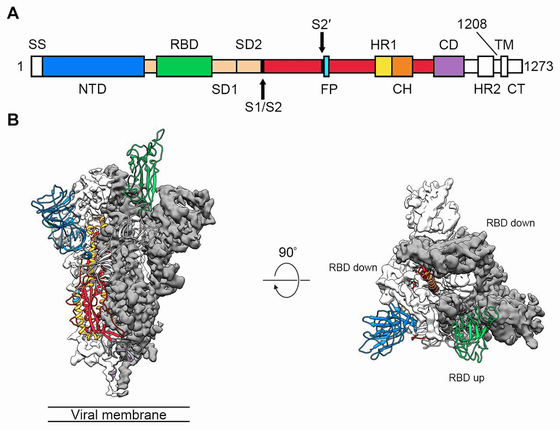
The spike glycoprotein (S) mediates virus entry and is a primary determinant of cell tropism and pathogenesis. It is classified as a class I fusion protein, and is responsible for binding to the receptor on the host cell as well as mediating the fusion of host and viral membranes—A process driven by major conformational changes of the S protein.;スパイク糖タンパク質(S)は、ウイルスの侵入を媒介し、細胞の向性と病因の主要な決定要因です。 それはクラスI融合タンパク質として分類され、宿主細胞の受容体への結合と、宿主とウイルス膜の融合を媒介します。これは、Sタンパク質の主要な立体構造変化によって引き起こされるプロセスです。
Coronaviruses are enveloped, spherical or pleiomorphic viruses, with typical sizes ranging from 80 to 120 nm. They possess a 5' capped, single-strand positive sense RNA genome, with a length between 26.2 and 31.7 kb, the longest amongst all RNA viruses. The genome is composed ofsix to ten open reading frames (ORFs). The first ORF comprises two-thirds of the genome and encodes the replicase proteins, whereas the last third contains the structural protein genes in a fixed order: (HE)-S-E-M-N (Figure 1A). : コロナウイルスは、エンベロープ、球形、または多形性ウイルスで、一般的なサイズは80〜120 nmです。 それらは、長さが26.2〜31.7 kbで、すべてのRNAウイルスの中で最も長い、5 'キャップの1本鎖プラスセンスRNAゲノムを持っています。 ゲノムは6〜10個のオープンリーディングフレーム(ORF)で構成されています。 最初のORFはゲノムの3分の2を構成し、レプリカーゼタンパク質をエンコードしますが、最後の3分の1は構造タンパク質遺伝子を一定の順序で含んでいます:(HE)-S-E-M-N(図1A)。
Variable numbers of ORF encoding accessory proteins are present between these genes. The genome is packaged into a helical nucleocapsid surrounded by a host-derived lipid bilayer. The virion envelope contains at least three viral proteins, the spike protein (S), the membrane protein (M) and the envelope protein (E) :これらの遺伝子の間には、さまざまな数のORFエンコードアクセサリータンパク質が存在します。 ゲノムは、宿主由来の脂質二重層に囲まれたらせん状のヌクレオカプシドにパッケージされています。 ビリオンエンベロープには、少なくとも3つのウイルスタンパク質、スパイクタンパク質(S)、膜タンパク質(M)、およびエンベロープタンパク質(E)が含まれています
In addition, some coronaviruses also contain a hemagglutinin esterase (HE). Whereas the M and E proteins are involved in virus assembly, the spike protein is the leading mediator of viral entry. The spike protein is also the principal player in determining host range :さらに、コロナウイルスの中には血球凝集素エステラーゼ(HE)を含むものもあります。 MおよびEタンパク質はウイルスのアセンブリに関与しますが、スパイクタンパク質はウイルス侵入の主要なメディエーターです。 スパイクタンパク質は、宿主範囲を決定する主要なプレーヤーでもあります
Viral entry relies on a fine interplay between the virion and the host cell. Infection is initiated by interaction of the viral particle with specific proteins on the cell surface. After initial binding of the receptor, enveloped viruses need to fuse their envelope with the host cell membrane to deliver their nucleocapsid to the target cell. The spike protein plays a dual role in entry by mediating receptor binding and membrane fusion. The fusion process involves large conformational changes of the spike protein. Coronaviruses use a variety of receptors and triggers to activate fusion, however fundamental aspects that enable this initial step of the viral life cycle are conserved. In this review, we will address entry strategies of coronaviruses and how these mechanisms are related to host tropism and pathogenicity.:ウイルスの侵入は、ビリオンと宿主細胞の間の細かい相互作用に依存しています。 感染は、ウイルス粒子と細胞表面の特定のタンパク質との相互作用によって開始されます。 受容体の最初の結合後、エンベロープウイルスは、そのエンベロープを宿主細胞膜と融合させて、ヌクレオカプシドを標的細胞に送達する必要があります。 スパイクタンパク質は、受容体結合と膜融合を媒介することにより、侵入において二重の役割を果たします。 融合プロセスには、スパイクタンパク質の大きな立体構造の変化が伴います。 コロナウイルスはさまざまな受容体とトリガーを使用して融合を活性化しますが、ウイルスライフサイクルのこの最初のステップを可能にする基本的な側面は保存されています。
Complicating matters when it comes to developing a vaccine is the fact COVID-19 has mutated.
Scientists have confirmed the virus has evolved into two strains: the ‘L-type’ and the ‘S-type’.
The latter is the older version of the virus and appears to be milder and less infectious.
The L-typecan spread quicklyand scientists from Peking University’s School of Life Sciences and the Institute Pasteur of Shanghai say it could be more aggressive.
The S and L mutations in COVID-19 were in the virus’ protein ‘spike’, said Dr Stephen Griffin, of the Leeds Institute of Medical Research and chair of the virus division at the Microbiology Society
The spike plays a key part in the infection process and is what vaccines target. Around 35 labs and institutions are developing a vaccine with some ready for human trials next month. Dr Griffin said developers would need to test if their prototype vaccines can still neutralise viruses with the mutations, which may not be a “huge hurdle” as the variations were “fairly limited”.
Sensitivity of Chest CT for COVID-19: Comparison to RT-PCR.
Fang Y, Zhang H, Xie J, Lin M, Ying L, Pang P, Ji W. Radiology. 2020 Feb 19:200432. doi: 10.1148/radiol.2020200432.
PMID: 32073353 DOI: 10.1148/radiol.2020200432
Analysis of factors associated with disease outcomes in hospitalized patients with 2019 novel coronavirus disease
Liu, Wei1; Tao, Zhao-Wu2; Lei, Wang1; Ming-Li, Yuan1; Kui, Liu3; Ling, Zhou3; Shuang, Wei3; Yan, Deng3; Jing, Liu4; Liu, Hui-Guo3; Ming, Yang5; Yi, Hu1Section Editor(s): Wei, Pei-Fang Author Information
Chinese Medical Journal: February 28, 2020 - Volume Publish Ahead of Print - Issue -
doi: 10.1097/CM9.0000000000000775 https://journals.lww.com/cmj/Abstract/publishahead/Analysis_of_factors_associated_with_disease.99363.aspx
The progression group had a significantly higher proportion of patients with a history of smoking than the improvement/stabilization group (27.3% vs. 3.0%, χ2 = 9.291, P = 0.018).
Patients in the progression group were more likely to receive high-level respiratory support than in the improvement/stabilization group (χ2 = 16.01, P = 0.001). Multivariate logistic analysis indicated that age (odds ratio [OR], 8.546; 95% confidence interval [CI]: 1.628–44.864; P = 0.011), history of smoking (OR, 14.285; 95% CI: 1.577–25.000; P = 0.018), maximum body temperature at admission (OR, 8.999; 95% CI: 1.036–78.147, P = 0.046), respiratory failure (OR, 8.772, 95% CI: 1.942–40.000; P = 0.016), albumin (OR, 7.353, 95% CI: 1.098–50.000; P = 0.003), and C-reactive protein (OR, 10.530; 95% CI: 1.224−34.701, P = 0.028) were risk factors for disease progression.
Outside of supportive care, the best approach for treating patients has also yet to be determined, but various therapeutic avenues are being examined, said Carlos del Rio, MD, of Emory University School of Medicine, Atlanta, and Preeti Malani, MD, MSJ, of the University of Michigan in Ann Arbor, in JAMA. They noted that the first U.S. patient was treated with the antiviral remdesivir, a monoclonal antibody that has been tested as a therapy against Ebola, and that based on past studies suggesting a possible benefit in SARS and Middle East respiratory syndrome (MERS), the HIV/AIDS drug lopinavir/ritonavir (Kaletra) is now being investigated in a Chinese trial as a treatment for the novel coronavirus. https://www.medpagetoday.com/infectiousdisease/publichealth/84725
2019 Novel Coronavirus—Important Information for Clinicians
Carlos del Rio, MD1; Preeti N. Malani, MD, MSJ2,3
Author Affiliations Article Information
JAMA. Published online February 5, 2020. doi:10.1001/jama.2020.1490 https://jamanetwork.com/journals/jama/fullarticle/2760782
Clinical Characteristics of 138 Hospitalized Patients With 2019 Novel Coronavirus–Infected Pneumonia in Wuhan, China
Dawei Wang, et al.
JAMA. Published online February 7, 2020. doi:10.1001/jama.2020.1585 https://jamanetwork.com/journals/jama/fullarticle/2761044
リンパ球減少症(リンパ球数、0.8×10⁹ / L [四分位範囲{IQR}、0.6-1.1])は97人の患者(70.3%)、80人の患者(58)でプロトロンビン時間の延長(13.0秒[IQR、12.3-13.7]) %)、および55人の患者(39.9%)でLDH(261 U / L [IQR、182-403])の上昇。
In Vitro Antiviral Activity and Projection of Optimized Dosing Design of Hydroxychloroquine for the Treatment of Severe Acute Respiratory Syndrome Coronavirus 2 (SARS-CoV-2)
Xueting Yao, et al.
Clinical Infectious Diseases, ciaa237,
https://doi.org/10.1093/cid/ciaa237
Published: 09 March 2020
Chloroquine is a widelyused anti-malarial with immunomodulatory effects[1-5].In a recent in vitro study chloroquine was found to inhibit the growth ofSARS-CoV-2in vitro[6]. This finding has been supported by clinical studies conducted in approximately one-hundred SARS-CoV-2infected patients [7, 8].
5) Li C, Zhu X, Ji X, et al. Chloroquine, a FDA-approved Drug, Prevents Zika Virus Infection and its Associated Congenital Microcephaly in Mice. EBioMedicine. 2017. 24: 189-194.
6) Wang M,Cao R, Zhang L, et al. Remdesivir and chloroquine effectively inhibit the recently emerged novel coronavirus (2019-nCoV) in vitro. Cell Res. 2020 . 7) Huang J. Efficacy of Chloroquine and Lopinavir/ Ritonavir in mild/general novel coronavirus (CoVID-19) infections: a prospective, open-label, multicenter randomized controlled clinical study. 13 Feb 2020. http://www.chictr.org.cn/showproj.aspx?proj=49263. 8) Li Y. Ministry of Science and Technology of China: chloroquine phosphate is effective in the treatment of novel coronavirus pneumonia. 17 Feb. http://news.ynet.com/
Risk Factors Associated With Acute Respiratory Distress Syndrome and Death in Patients With Coronavirus Disease 2019 Pneumonia in Wuhan, China
Chaomin Wu, et al.
JAMA Intern Med. Published online March 13, 2020. doi:10.1001/jamainternmed.2020.0994 https://jamanetwork.com/journals/jamainternalmedicine/fullarticle/2763184
March 13, 2020
Treatment of 5 Critically Ill Patients With COVID-19 With Convalescent Plasma Chenguang Shen, et al. JAMA. Published online March 27, 2020. doi:10.1001/jama.2020.4783
重症患者のケア
Care for Critically Ill Patients With COVID-19
Srinivas Murthy, et al.
JAMA. Published online March 11, 2020. doi:10.1001/jama.2020.3633
Guidance for Cardiac Electrophysiology During the Coronavirus (COVID-19) Pandemic from the Heart Rhythm Society COVID-19 Task Force; Electrophysiology Section of the American College of Cardiology; and the Electrocardiography and Arrhythmias Committee of the Council on Clinical Cardiology, American Heart Association
【ECMO】
February 19, 2020
Preparing for the Most Critically Ill Patients With COVID-19
The Potential Role of Extracorporeal Membrane Oxygenation
Graeme MacLaren, et al. JAMA. Published online February 19, 2020. doi:10.1001/jama.2020.2342
要するに 役割不明:詳細情報が無い
The role of ECMO in the management of COVID-19 is unclear at this point. It has been used in some patients with COVID-19 in China but detailed information is unavailable.